Jigme Dorji National Park
Wildlife & Environment
A protected wilderness
Jigme Dorji National Park
Jomolhari stands within Jigme Dorji National Park, one of Bhutan’s largest protected areas, spanning a vast range of altitudes from warm valleys to glaciers and high passes. The trek crosses the park almost from end to end, which is why a permit and licensed guide are required — and why the route feels so wild.
The animals
Snow leopard, blue sheep and takin
The park shelters the elusive snow leopard and its main prey, the blue sheep (bharal), on the high slopes. Lower down live the takin — Bhutan’s unusual national animal — along with Himalayan marmots, musk deer and a rich birdlife. Sightings of the big cats are rare and precious; their presence is the reason the Jomolhari Mountain Festival exists.
The flora
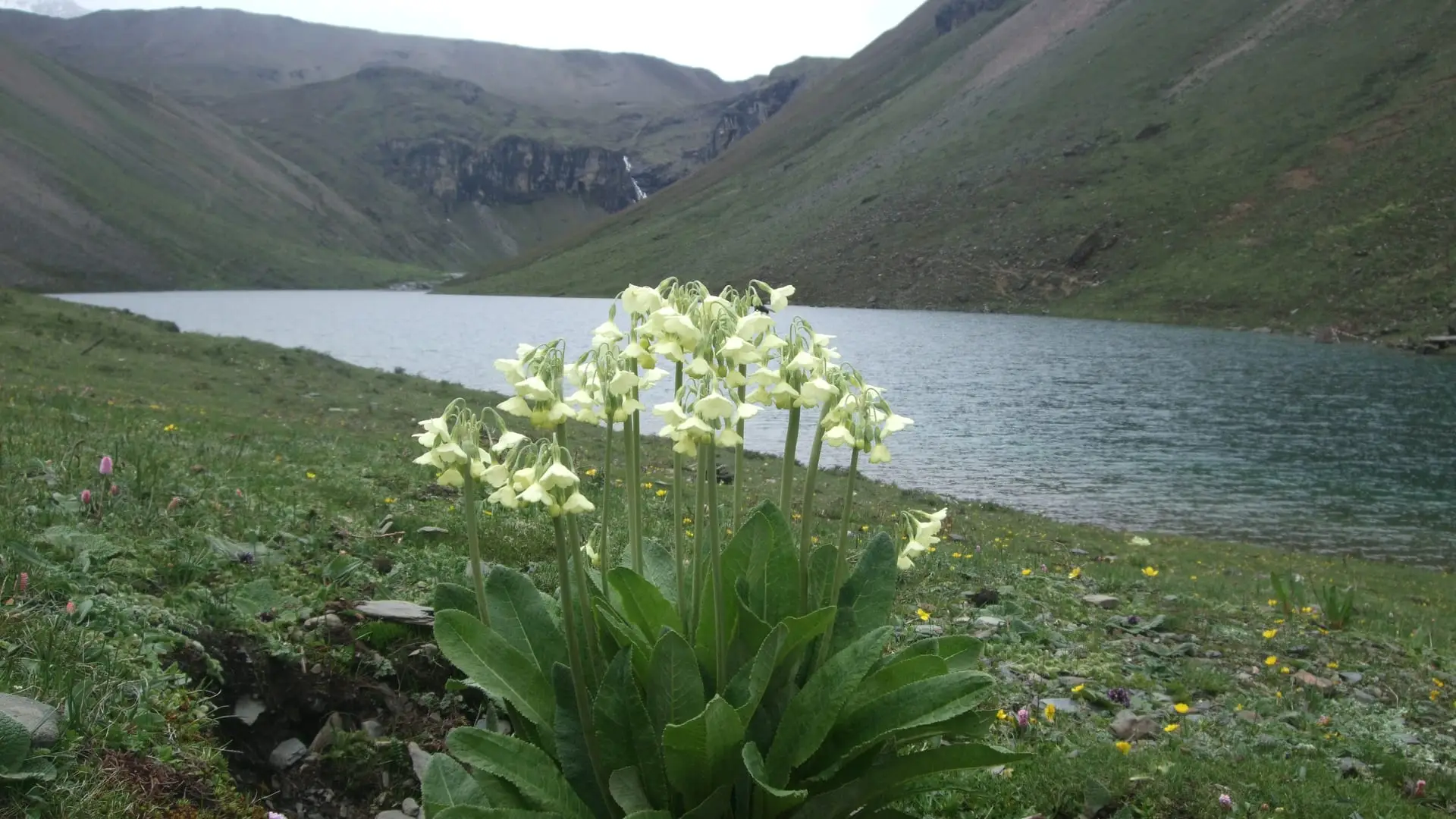
The blue poppy & the high meadows
In late spring the meadows flush with rhododendron and, famously, the blue poppy (Meconopsis) — Bhutan’s national flower — which draws botanists to this trek in particular. The high valleys are also a watershed: Jomolhari’s glaciers feed the Paro Chhu and the rivers that sustain the country below, a reminder that these peaks are the source of Bhutan’s water and its hydropower.
See it for yourself
Little Bhutan is a locally owned operator whose Jomolhari trek includes your licensed guide, permits, government fees, camp crew and ponies — so you can focus on the mountain.
Trips arranged by Little Bhutan · locally owned & operated