Questions & answers
The trek, before you go
The short version
The questions everyone asks first
Most doubts about the Jomolhari trek come down to three things: am I fit enough, what is camping at 4,000 m actually like, and how does the altitude get handled? The answers below cover those. For the day-by-day route see the trek, and for fees, visas, seasons and packing see plan your trek.
Before you go
How fit do I need to be for the Jomolhari trek?
Fit enough to walk 15–22 km a day, five to eight hours at a time, for about eight days running. There is no technical climbing — it is all walking — but solid general fitness and ideally prior high-altitude trekking experience are strongly recommended, because much of the route sits above 4,000 m.
Where do you sleep on the trek?
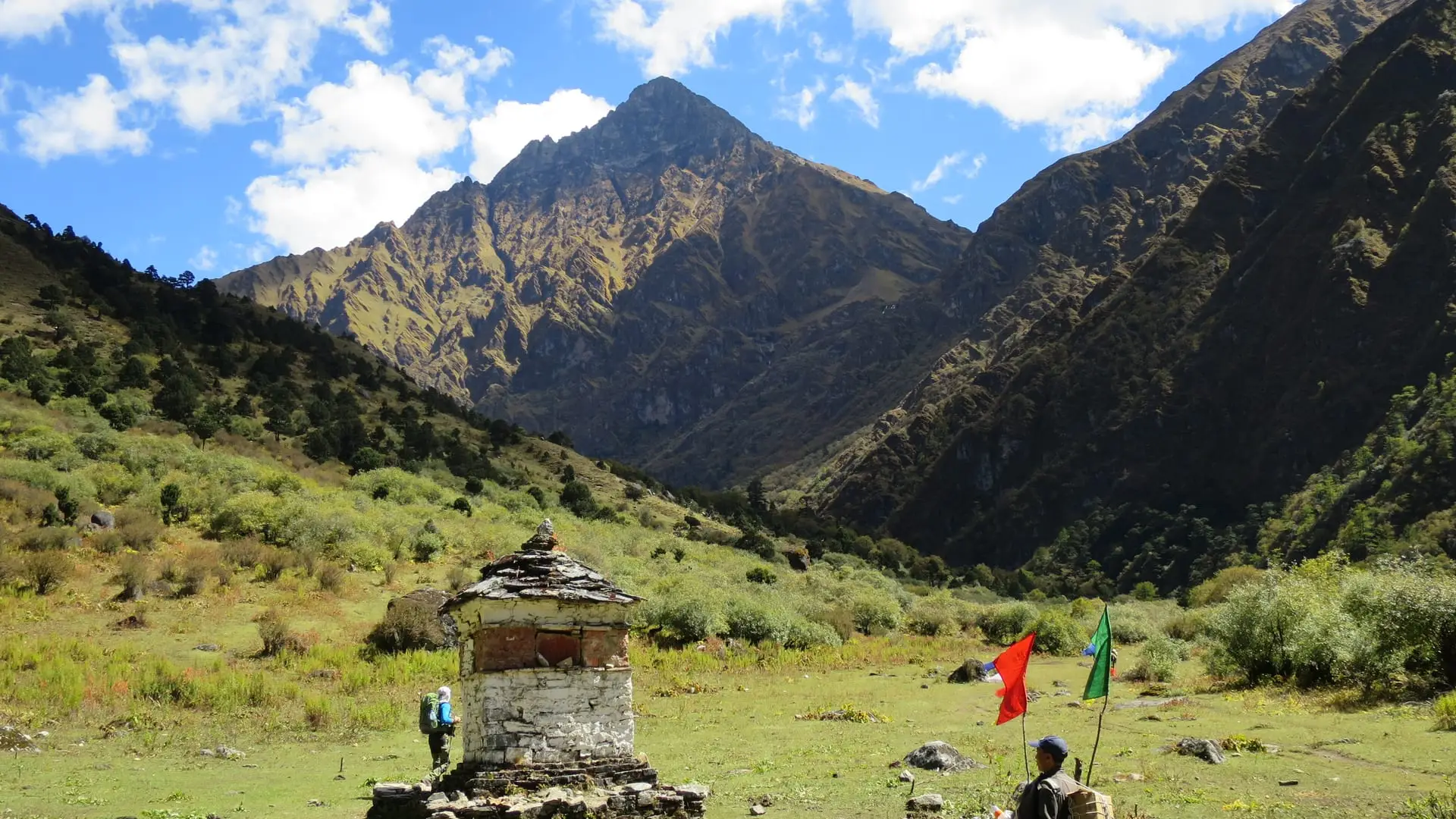
In tents. Bhutan treks are camping treks, not teahouse treks — there are no lodges anywhere on the route. Your crew pitches camp at established campsites each afternoon; some, like Jangothang, have a basic kitchen shelter and permanent toilets, but expect simple sanitation throughout.
Do I have to carry my own gear?
No. Pack ponies (and yaks at higher camps) carry the tents, food and your main bag, and a full crew — licensed guide, cook and helpers — travels with you. You walk with a daypack: water, warm layers, rain shell and camera.
How cold does it get at night?
Cold, even in the best trekking months — most camps beyond day one sit between roughly 3,300 m and 4,100 m, and nights at that altitude drop below freezing. Bring a warm sleeping bag rated for sub-zero temperatures, or confirm your operator provides one.
Why is there a rest day at Jangothang?
Acclimatisation. Base camp sits at 4,044 m and the days that follow cross Nyile La and Yele La, both near 4,900 m — so the itinerary deliberately pauses for a day beneath the mountain before going higher. Use it for a gentle day walk, drink plenty of water, and tell your guide early if you feel unwell.
What is included in a packaged trek?
Typically the licensed guide, cook and camp helpers, two-person sleeping tents, dining and toilet tents, foam mattresses, all camp meals, and the ponies that carry equipment. International airfare, travel insurance and personal drinks are typically not included — check your operator’s exact list.
Is there a shorter version of the trek?
Yes — the Jomolhari Loop. It reaches Jangothang the same way, then returns to the Paro side over Bhonte La (about 4,890 m) instead of continuing across to Thimphu, and is generally rated a notch easier than the full traverse. Operators name the two routes inconsistently, so always check which one you are booking.
Still have questions?
Little Bhutan’s local team has walked this trail for years — ask them anything as part of your enquiry.
Trips arranged by Little Bhutan · locally owned & operated